
If you are sizing up a Coeur d’Alene investment property, the fastest way to get in trouble is to trust one headline number. A citywide median price, a rent estimate, or a tax figure can be useful, but none of them tells the full story on its own. If you want a deal that actually works, you need to read the numbers the way an appraiser and investor would. Let’s dive in.
Start With the Right Market Benchmark
In Kootenai County, the March 2026 MLS snapshot shows a median home price of $545,000, with 507 homes sold year-to-date, 778 active residential listings, and 97 days from list to close. That data applies to site-built homes on less than 2 acres, so it works best as a single-family benchmark rather than a catch-all for every property type.
At the city level, the numbers shift. Zillow reports Coeur d’Alene typical home values at $604,956 and a March 2026 median sale price of $581,838, while Redfin reports a March 2026 median sale price of $562,500. That spread is normal because each source tracks a different slice of the market.
The key takeaway is simple: match your benchmark to the property you are buying. If you are analyzing a duplex, an ADU setup, or a property in a very specific pocket of town, a broad city average is only a starting point.
Why One Number Is Never Enough
It is tempting to grab the highest sale metric and the strongest rent estimate to justify an offer. That is not underwriting. That is wishful thinking.
A better approach is to keep the geography, property type, and exit strategy consistent. If you plan to hold a single-family rental, compare it to similar single-family rentals and recent nearby sales, not a general county median or a property class that behaves differently.
In Coeur d’Alene, the market is still active, but the data does not support loose assumptions. The strongest buyers and investors are the ones who stay disciplined even when inventory is tight.
Build Income Assumptions Conservatively
Once you have a realistic purchase benchmark, the next step is rent. For Coeur d’Alene ZIP code 83814, HUD’s FY 2026 Small Area Fair Market Rent schedule lists $1,300 for a one-bedroom, $1,540 for a two-bedroom, $2,140 for a three-bedroom, and $2,580 for a four-bedroom unit.
Those figures are useful, but they are not a promise of what your unit will lease for. HUD defines Fair Market Rent as an estimate of gross rent, including utilities, for 40% of rental housing in the area. That makes it a solid baseline, not a guaranteed outcome.
Zillow adds another rent check, showing an average Coeur d’Alene rent of $1,800 as of May 15, 2026, with 160 available rentals. That broad figure can help you sanity-check your assumptions, but it should not replace signed leases or very close rental comps.
Verify Rent Against the Actual Unit
The rent number on paper has to match the real property in front of you. Finish level, location, unit layout, parking, utility setup, and overall condition all affect what a tenant may actually pay.
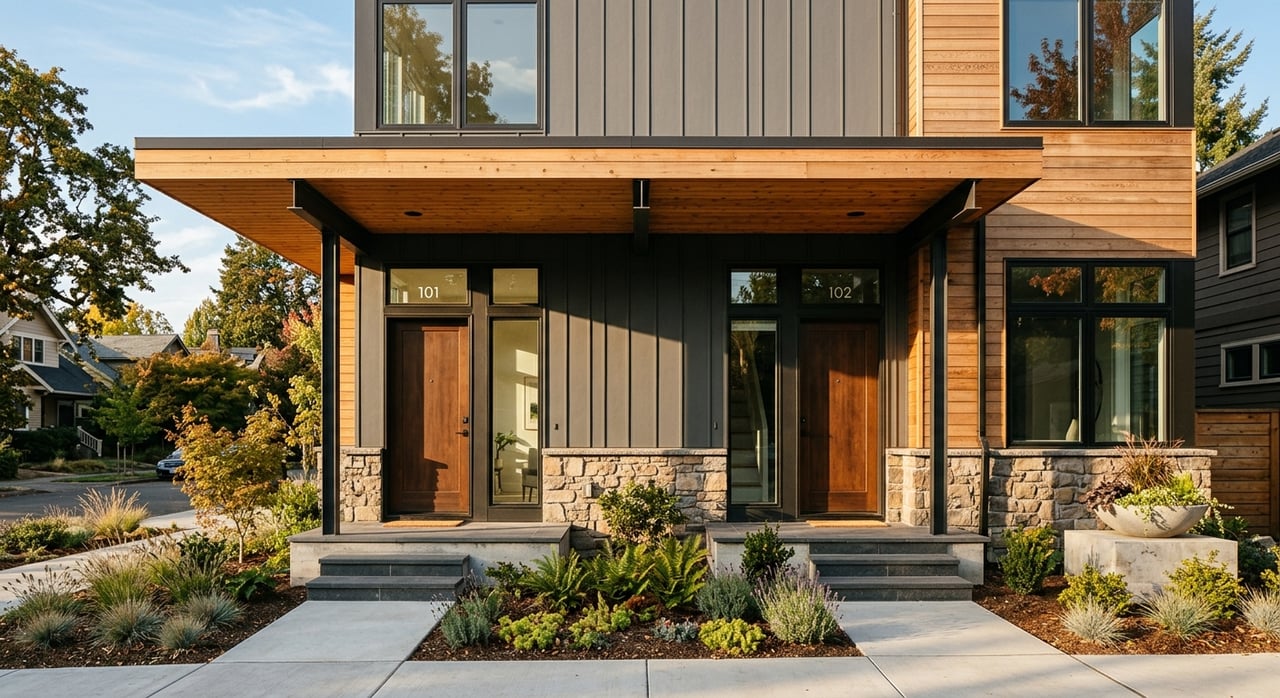
That matters even more if the property has a mixed-use potential, a basement apartment, or space for an accessory unit. If the unit count or rental setup is part of the investment story, you need to confirm that story before you build your pro forma around it.
This is where a valuation-first mindset matters. A property is not valuable because a seller says it could rent for more. It is valuable when the rent assumption is supported by real, comparable evidence.
Know the ADU and Infill Rules
If you are looking at a property with development upside, Coeur d’Alene’s local rules matter. The city states that ADUs are already permitted in its zoning code, and its ADU handout sets an 800-square-foot maximum and a cap of 75% of the primary dwelling’s size.
The city also notes that duplexes and ADUs are addressed separately in the zoning code. Its planning materials further note that PUDs, infill overlay districts, and hillside development can create unique conditions.
That means you should never assume a lot can support an added unit just because the physical space seems available. Before you assign value to expansion potential, verify zoning, lot size, and any site-specific development conditions.
Underwrite Expenses With Real Timing
Income gets the attention, but expenses decide whether a property actually cash flows. In Kootenai County, the 2025 average property tax rate was 0.452% overall, with 0.541% in urban areas and 0.341% in rural areas.
Those rates are helpful for early modeling, but your actual tax bill depends on the parcel’s assessed or net taxable value after exemptions. For investors, the bigger point is that tax assumptions need to be property-specific, not borrowed from a generic online calculator.
Timing matters too. Kootenai County says tax notices are mailed by the fourth Monday in November, with half due December 20 and the second half due June 20. If the first half goes unpaid, a 2% late charge plus 1% monthly interest begins January 1.
Do Not Count on Owner-Occupant Tax Relief
This is one of the easiest mistakes for new investors to make. Kootenai County’s homeowner’s exemption requires the owner to occupy the home as a primary current residence.
Idaho’s Property Tax Reduction program is also limited to qualified homeowners’ primary Idaho residences. In other words, if you are buying a true investment property, you generally should not underwrite the deal as if owner-occupant tax relief will apply.
For developers, there may be a site-improvement exemption available for certain land held for sale, but it comes with conditions. The county states that the developer must have made the improvements and still own or control the land, and the exemption can be lost when buildings are completed or title is conveyed.
Use an Appraisal-Style Lens
Strong investment analysis starts with the same logic used in valuation. Kootenai County explains that Idaho assessments are based on market value as of January 1 of the tax year, and assessed values should fall within a 90% to 110% range of fair market value.
The county’s comparable-sales appeal process also highlights the core valuation methods: cost, sales comparison, and income. That is a useful framework for investors because it keeps you grounded in evidence instead of marketing language.
In practical terms, you want recent comparable sales with similar size, location, acreage when relevant, and condition. You also want the income story to make sense on its own, especially if the property is being sold as an investment opportunity.
Stress-Test Before You Call It a Deal
A property does not become a good investment because it looks cheap relative to one comp. It becomes a good investment when the numbers still hold up under pressure.
That means asking questions like these:
- What if rent lands at the conservative end of the range?
- What if vacancy runs longer than expected?
- What if the resale timeline stretches beyond your target?
- What if repairs, capital reserves, insurance, and taxes come in higher than your first draft?
FHFA guidance on multifamily underwriting points to the same core principle: the property should generate enough cash flow to cover operating expenses and debt service. A simple way to think about that is DSCR, which is net operating income divided by annual debt service.
You do not need to overcomplicate the math. You do need to make sure the deal survives realistic assumptions.
What a Solid Coeur d’Alene Deal Looks Like
In this market, a solid investment property is not just the one with the lowest asking price. It is the one supported by a defensible comp set, realistic rent assumptions, verified zoning or use potential, and expenses that reflect the real carry cost.
That is especially important in Coeur d’Alene because the numbers vary depending on the source. MLS, Zillow, Redfin, and HUD all offer helpful data points, but they are not interchangeable.
The best way to protect yourself is to narrow the analysis. Use the exact neighborhood or ZIP code when possible, match the unit count and property condition, and make sure the strategy works even if the market does not give you a perfect outcome.
Why a Valuation-First Approach Matters
If you are buying in North Idaho, you are not just buying a property. You are buying a set of assumptions about value, rent, timing, and risk.
That is why we believe in turning data into deals. A careful read of the numbers can help you avoid overpaying, spot weak underwriting, and move forward with more confidence.
If you want help analyzing a Coeur d’Alene investment property with a practical, appraisal-driven lens, reach out to Jimy Black. Schedule a consultation today.
FAQs
What is the median home price in Coeur d’Alene for investment analysis?
- March 2026 data varies by source, with Kootenai County MLS showing a $545,000 median for site-built homes on less than 2 acres in the county, Zillow showing a $581,838 median sale price in Coeur d’Alene, and Redfin showing $562,500 for the city.
What rent numbers should you use for a Coeur d’Alene investment property?
- Start with conservative benchmarks like HUD Fair Market Rents for ZIP 83814 and broad market checks like Zillow’s average rent, then verify the actual unit with nearby comparable rentals and lease evidence.
Are ADUs allowed in Coeur d’Alene investment properties?
- Coeur d’Alene says ADUs are already permitted in its zoning code, with an 800-square-foot maximum and a size cap of 75% of the primary dwelling, but site-specific zoning and development conditions still need to be verified.
How are property taxes handled for Kootenai County investment properties?
- Kootenai County mails tax notices by the fourth Monday in November, with payments due in two halves on December 20 and June 20, so investors should account for both the amount and timing in their cash-flow planning.
Can you use the homeowner’s exemption on a Coeur d’Alene rental property?
- No. Kootenai County’s homeowner’s exemption applies to owner-occupied primary residences, so it generally does not apply to a true investment property.
What makes a good investment property deal in Coeur d’Alene?
- A good deal is one that still pencils after realistic rent, vacancy, taxes, insurance, repairs, reserves, and debt service, using comparable sales and rental data that truly match the property and location.