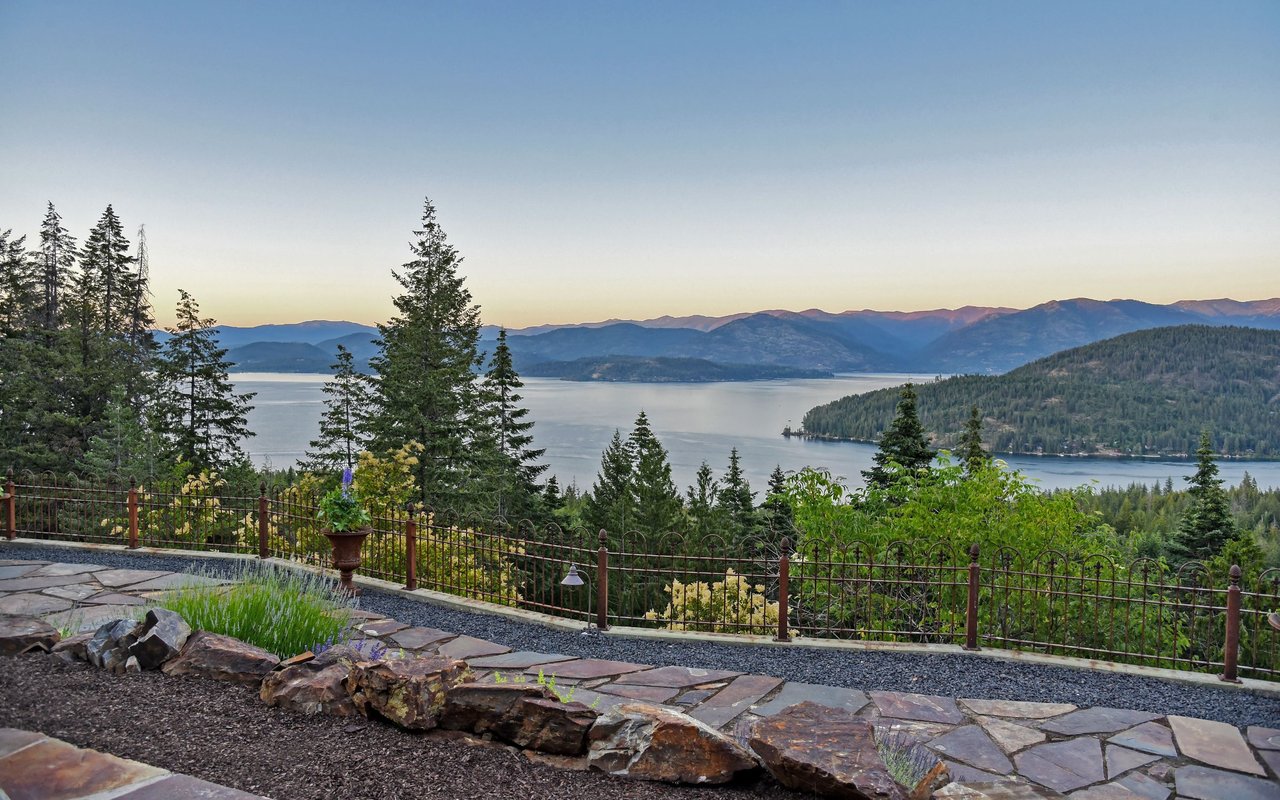
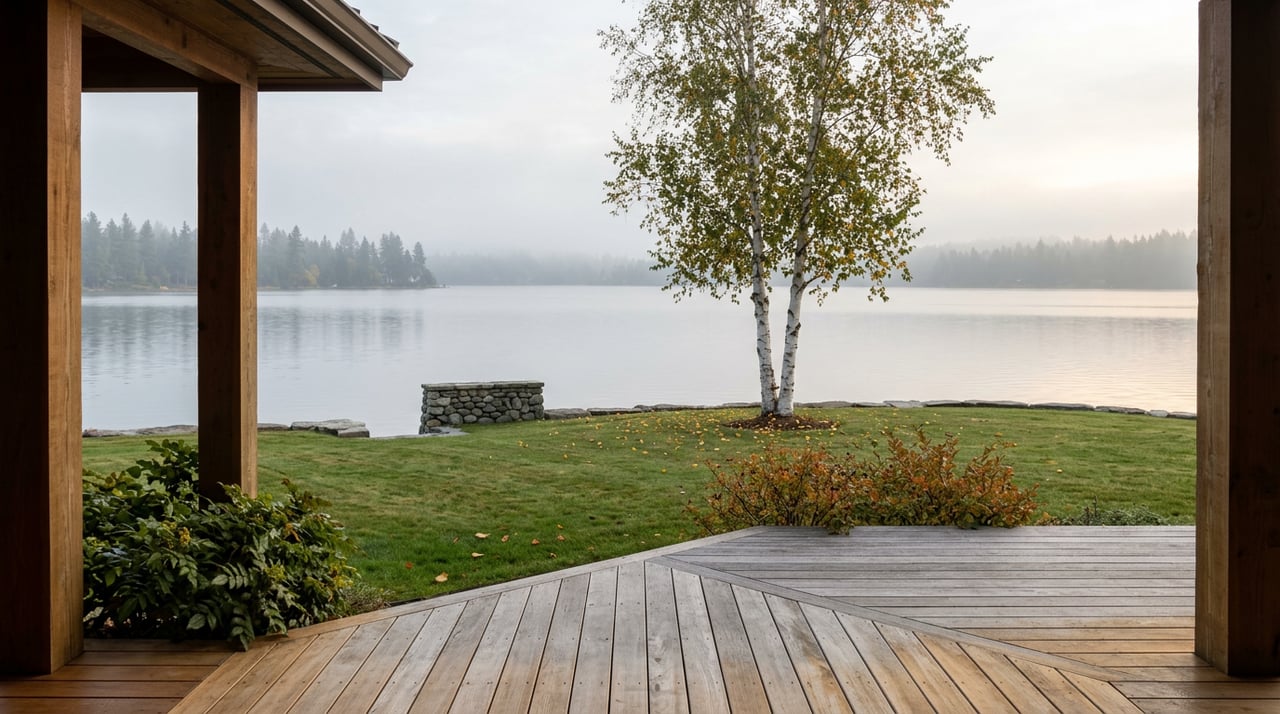
If you walked down to Sandpoint City Beach today, would you notice anything about to change?
You wouldn't, and that's the part worth understanding before you plan anything else around the lake this fall. Today is the last day the U.S. Army Corps of Engineers holds Lake Pend Oreille at summer pool elevation, 2,062 to 2,062.5 feet. Starting tomorrow, Monday, the annual fall drawdown begins, stepping the lake down in stages through the middle of November. On paper, the season turns tomorrow. On the water, nothing will look different for another week or two. The schedule the Corps published isn't one steady slope. It's two different speeds stitched together, and knowing where the seam falls is what actually matters if you use this lake.
The schedule has two speeds, not one
The Corps' published targets for Albeni Falls Dam, which controls the top 11.5 feet of Lake Pend Oreille, break down like this:
| Date | Target elevation | What that means |
|---|---|---|
| Through Sept. 20 | 2,062 to 2,062.5 ft | Full summer pool, the level the lake has held since late June |
| By Sept. 28 | Stay above 2,061 ft | A slow, deliberate step down, barely a foot in a week |
| By Sept. 30 | 2,060 to 2,061 ft | First real movement, still close to summer conditions |
| No later than Nov. 15 | 2,051 to 2,051.5 ft | Winter pool, held until kokanee spawning wraps up in late December |
Read that middle stretch again. From the day the drawdown begins to the end of September, the lake drops roughly a foot and a half. Then, between October 1 and November 15, it has to lose another nine and a half feet. That's the same amount of water coming down in less than seven weeks that took the entire first stage more than a week to barely register. The first phase is gentle on purpose. The second phase is where the lake actually changes shape.
What that means if you're on the water this fall
For the rest of September, expect the lake to behave like it has all summer. Boat ramps, dock clearance, and the usual coves will function close to normal, because the Corps is holding elevation above 2,061 feet through the 28th before nudging it lower. If you've got a last weekend of paddling or fishing planned before things get complicated, this is that weekend.
October is when it starts to show. The shallower water around the deltas moves first, since less depth means less water has to disappear before the bottom shows. Pack River Delta and Clark Fork Delta are the places to watch, both known for exposing sandbars and stumps as the pool drops. By the back half of October, that same exposure starts reaching into coves and shoreline stretches around the rest of the lake, not just the delta systems.
By early-to-mid November, the lake is closing in on its winter floor of 2,051 to 2,051.5 feet, a level the Corps holds until kokanee finish spawning, typically into late December. That's not a temporary dip. It's the lake's baseline for most of the winter, and it's the elevation that determines which launches and shoreline access points still work once the water's down for good.
Which boat launches actually hold up at low pool
This is where it stops being an abstract schedule and turns into a practical question, and Bonner County has already answered it. According to the county's own recreation guidance, Garfield Bay and Hope Boat Launch are the two county-maintained launches that remain usable once the lake reaches low pool. Laclede and Bonner Park West are explicitly flagged as not advisable at low pool, meaning they're fine now but won't be reliable once the drawdown finishes its work.
If your fall plans involve getting a boat in or out of the water anytime after the lake passes its late-September marker, Garfield Bay and Hope are the two spots built to handle it. Everywhere else gets more uncertain the further into October and November you go.
Why the lake does this on purpose
None of this is drought, and none of it is neglect. Albeni Falls Dam is a federally operated project, and the top 11.5 feet of the lake are managed as a reservoir under agreements between the Army Corps and the Bonneville Power Administration. The drawdown serves two specific jobs at once. The first is fish habitat: winter pool needs to be reached by mid-November so shoreline kokanee spawners aren't left high and dry, which is the exact language the Corps uses to describe the timing. The second is power. Once the lake is drawn down, BPA has room under its Flexible Winter Pool Operations agreement to raise the level again by up to five feet later in the winter, generating additional power when the region needs it.
That's the trade the lake makes every year. It gives up nearly ten feet of surface area for two months so that spawning habitat and winter power generation both get what they need, and the schedule is built to protect one before it accommodates the other.
This is also the stretch of the year where the lake's boating community feels the calendar most directly. The Lake Pend Oreille Yacht Club, founded in Bayview in 1977, and the Sandpoint Sailing Association, based out of Windbag Marina, both run their seasons around exactly this kind of water. So does MacDonald's Resort, a family-run marina on the lake since 1951. None of them are guessing when the water starts dropping. They've watched this pattern long enough to plan slip changes and haul-outs around it instead of getting caught by it.
The window that actually matters
The headline "the drawdown is starting" is technically true and practically useless on its own, because it tells you nothing about when to act. The number that matters is September 30. Before that date, the lake is still behaving like summer. After it, the real descent begins, and it doesn't let up until mid-November.
If you're on this lake through the fall, that gives you a real planning window rather than a vague seasonal warning. Get your last normal outings in before the end of September. Expect the shallow delta areas to show change first in October. And if you need a boat in the water once the drawdown is well underway, plan around Garfield Bay or Hope, since those are the two the county itself has vetted for low pool.
Living on Lake Pend Oreille means understanding its calendar, not just its views. Humble & Black tracks details like this because they shape what it actually feels like to own a piece of this shoreline across all four seasons, not just the two months everyone photographs. If you're thinking about what that ownership looks like year-round, schedule a consultation today with Humble & Black.